Camouflage Seamless Vector Patterns SVG
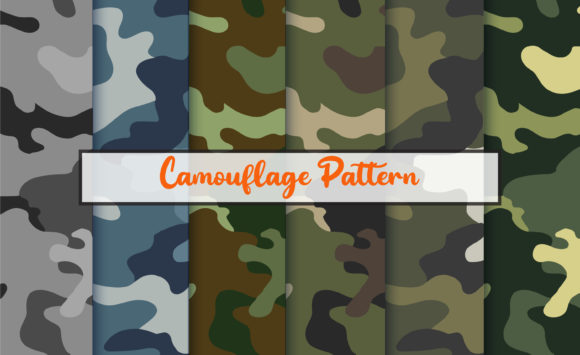
If you're sourcing design assets for fabric printing, branding backgrounds, or digital wall graphics—especially with a tactical, utilitarian, or rugged aesthetic—Camouflage Seamless Vector Patterns SVG delivers precision, flexibility, and real-world usability. This isn’t a raster image stretched thin or a low-res JPEG tiled awkwardly at the edges. It’s a collection of 100 fully editable, mathematically precise vector patterns built from expanded outline paths—no stray strokes, no hidden layers, no font dependencies.
What Makes These Patterns Stand Out Visually—and Functionally
Each pattern in the set leans into classic military camouflage structure: organic shapes, layered tonal variation, and intentional disruption of visual continuity—but rendered in clean, abstract monochrome. That monochrome base isn’t limiting; it’s strategic. Because every line and stitching detail is expanded to a path—not a stroke—it accepts color fills instantly in Illustrator or any vector editor. Swap from charcoal grey to olive drab to deep navy in seconds. No re-tracing. No guesswork.
The “seamless” part isn’t just marketing language. These repeats are engineered to tile without visible joins—even when scaled to cover a 20-foot trade show backdrop or shrink down to a 2-inch textile swatch. That reliability comes from how they’re constructed: anchor points aligned, bounding boxes normalized, and edge vectors mirrored with pixel-perfect symmetry. You won’t find jagged transitions or misaligned nodes that break the illusion at high zoom or large scale.
Where These Patterns Actually Shine in Practice
Designers use Camouflage Seamless Vector Patterns SVG where texture needs to support—not compete with—content. Think: subtle background overlays on editorial layouts (a muted camo under a bold headline adds depth without distraction), or as a tactile layer beneath product photography for outdoor gear brands. Print studios rely on them for custom apparel linings, patch embroidery guides, or heat-transfer templates—because the expanded paths translate cleanly to cutting plotters and DTG printers.
For small business owners launching a new apparel line, these patterns cut production time dramatically. Need a camo lining for a jacket? Pull one pattern, recolor to match your brand palette, drop it into your tech pack, and send to the factory—all in under five minutes. No waiting for custom raster repeats or chasing inconsistent DPI across file formats.
Bloggers and content creators use them differently: as dynamic social media backdrops that reinforce tone without requiring custom illustration each time. A monochrome camo SVG behind a gear review video thumbnail signals durability and field-readiness—immediately, silently, consistently.
No Guesswork, No Licensing Surprises
All files ship royalty-free. That means you can use them commercially—on merchandise, packaging, websites, ads, apps—without per-use fees or attribution requirements. The license covers both personal and commercial applications, including resale items like printed fabric by the yard or digitally distributed design kits. There’s no “extended license” upsell hiding behind fine print.
You get native Illustrator (.AI) files compatible with Illustrator 10 and newer—so even legacy studio setups stay supported. EPS ensures compatibility with older prepress workflows. SVG files work natively in modern web environments (think CSS background-image tiles or inline SVG filters). And because designers still need quick previews and mockup integration, the package includes high-resolution JPG and transparent PNG exports—4000 × 4000 px, sharp at 300 DPI, ready for client presentations or print proofs.
Practical Tips Before You Drop One Into Your Next Project
Test contrast early. Monochrome doesn’t mean low-contrast. Some patterns use tight tonal ranges that vanish against light or dark UI elements. Preview your chosen camo over actual background colors—not just white artboards—before finalizing.
Scale intentionally. While these vectors scale infinitely, extremely small applications (like 8-pt text highlights or micro-icons) may lose pattern legibility. If using for tiny UI elements, pick patterns with bolder shape density—or simplify manually by merging adjacent paths.
Pair thoughtfully—not decoratively. Camo patterns carry strong associative weight: utility, resilience, discretion. They pair well with clean sans serifs (Helvetica Neue, Inter, Montserrat) for modern technical branding—or with sturdy slab serifs (Rockwell, Courier Prime) for vintage military authenticity. Avoid delicate scripts or ornate serifs unless irony or juxtaposition is the deliberate goal.
Check your output workflow. If sending to a print vendor, confirm whether they prefer outlined EPS or flattened PDFs. Since all strokes are already expanded, there’s no risk of missing fonts or rendering inconsistencies—but always do a test print at 10% scale first to catch subtle tiling artifacts before committing to full runs.
Why This Isn’t Just Another “Free Camo Download”
You’ll find countless free camo textures online—many low-res, many with watermarks, many built from raster tiles that blur or pixelate when enlarged. What separates Camouflage Seamless Vector Patterns SVG is its consistency across contexts. A single pattern works equally well as:
- A repeating background in a Figma prototype (via SVG import)
- The base layer for a woven jacquard fabric spec
- A distressed overlay in Photoshop (using the transparent PNG with blending modes)
- A scalable fill inside an SVG animation timeline
- A vector engraving template for laser-cut wood or leather
That cross-medium reliability saves hours—not just in asset prep, but in revision cycles. When a client asks, “Can we try this in desert tan instead of forest green?”—you change one fill color and export again. No new files. No new approvals. Just clarity, speed, and control.
Whether you’re developing a new outdoor apparel identity, building a cohesive content series for a survivalist blog, or designing stage backdrops for a music festival with tactical vibes—these aren’t decorative afterthoughts. They’re foundational design assets, built to behave predictably, adapt quickly, and communicate authentically.