Contemporary Palm Leaves Patterns: A Versatile Vector Resource for Design Innovation
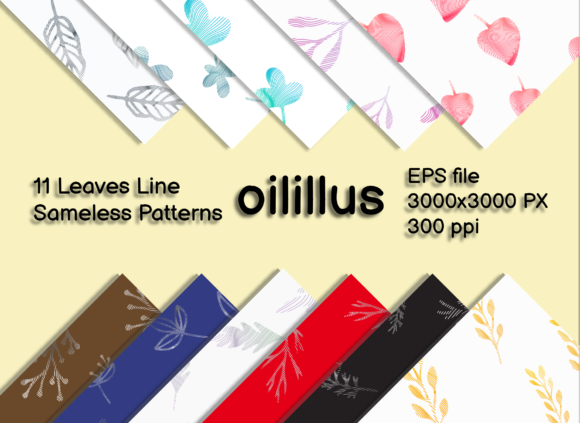
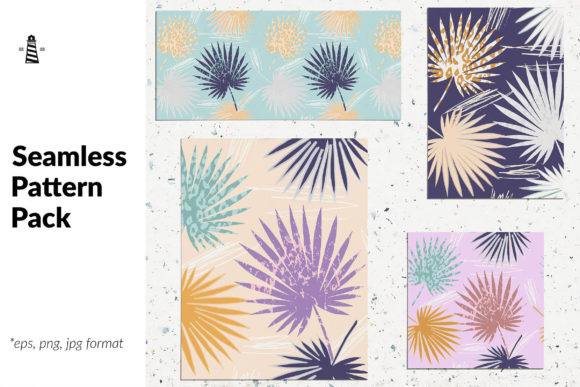
Contemporary Palm Leaves Patterns represent a thoughtful evolution of botanical motif design—moving beyond clichéd tropical clichés into refined, expressive abstraction. These aren’t stylized stock illustrations or AI-generated approximations. Instead, they’re the result of deliberate, human-led craftsmanship: high-detail, hand-drawn seamless patterns built around abstracted palm leaf forms. Each element balances organic rhythm with intentional geometry—curving fronds echo natural growth while negative space and line weight are calibrated for visual harmony across repeats. This duality makes them uniquely adaptable across physical and digital applications, from luxury textile printing to responsive web interfaces.
What Makes These Patterns Distinctively Hand-Drawn?
The distinction lies not just in origin—but in observable texture, variation, and intentionality. Unlike algorithmically tiled vectors or traced photographs, these 100 vector art pieces retain subtle irregularities: slight tapering at leaf tips, nuanced line modulation where stems branch, and carefully considered spacing that avoids mechanical repetition. The artist’s hand is evident in how overlapping leaves intersect—not with uniform clipping, but with layered transparency implied through contour shifts. Even within seamless tiling, no two adjacent repeats feel identical; minor rotational adjustments and scale variations preserve a sense of crafted authenticity.
This attention extends to technical execution. All 8 EPS files are fully editable—anchor points remain ungrouped, strokes are outlined only where necessary, and color palettes use named swatches for easy global adjustment. That means a textile designer can isolate a single frond to recolor for seasonal collections, or a branding agency can extract motifs to integrate into custom icon systems—without reverse-engineering raster artifacts or battling locked layers.
Practical Applications Across Industries
The versatility of Contemporary Palm Leaves Patterns emerges most clearly when mapped against real-world production needs:
- Textile & Surface Design: With all PNG and JPG files sized at 12 × 12 inches and output at 300 dpi, these patterns meet commercial print standards for fabric, wallpaper, and wrapping paper. Designers working with digital textile printers (like Kornit or Mimaki) can tile the EPS files directly into repeat layouts, ensuring crisp edge alignment without interpolation blur—even at large-scale wall murals or yardage rolls.
- Digital Product & Web Interfaces: The 6 PNG files include transparent backgrounds, making them ideal for UI overlays, section dividers, or animated background elements. Because they’re vector-native, developers can convert SVG versions (derived from EPS) for lightweight, resolution-independent use—enhancing performance on high-DPI displays without sacrificing fidelity.
- Stationery & Print Collateral: Greeting cards, wedding invitations, and boutique packaging benefit from the tactile suggestion embedded in hand-drawn linework. When printed on textured cotton paper or letterpress, the fine strokes catch ink differently than flat vector fills—adding dimensionality that resonates emotionally with recipients.
- Educational & Creative Pedagogy: Art and design educators use these patterns as case studies in repeat structure, negative space management, and abstraction methodology. Students analyze how simplification preserves botanical recognition while enabling scalability—a foundational skill in surface pattern curriculum.
Technical Specifications Designed for Real Workflows
Understanding file utility requires looking past nominal formats to actual integration points:
- 8 EPS Files: Industry-standard vector containers compatible with Adobe Illustrator, CorelDRAW, Affinity Designer, and Inkscape. Each contains one unique pattern variant—no duplicated motifs. All are built using CMYK- and RGB-safe color models, with Pantone references embedded where applicable for brand-aligned reproduction.
- 6 PNG Files (Transparent Background): Optimized for digital placement—ideal for mockups, social media assets, or layered design comps. The 12 × 12 inch / 300 dpi resolution ensures pixel-perfect clarity when scaled down for thumbnails or up for full-screen web backgrounds.
- 8 JPG Files (White Background): High-fidelity previews suitable for client presentations, e-commerce listings, or portfolio thumbnails. Consistent sizing enables side-by-side comparison of density, contrast, and motif emphasis across the set.
Notably, none of the files rely on embedded raster effects or non-standard fonts. Every gradient is converted to mesh or solid fills; every shadow is a manually constructed shape—not a drop-shadow filter that may render inconsistently across software versions. This eliminates common handoff friction between designers, developers, and printers.
Why Seamless Abstraction Matters More Than Literal Representation
A literal palm leaf illustration anchors itself to a specific geography, season, or cultural context—limiting reinterpretation. Contemporary Palm Leaves Patterns sidestep that constraint by abstracting core visual DNA: the lanceolate form, the midrib’s central axis, the rhythmic lateral branching. One pattern might reduce leaves to interlocking silhouettes; another uses only stem lines, suggesting foliage through implied volume. This abstraction serves functional goals:
- Scale Flexibility: Abstracted forms avoid detail collapse when shrunk to 2-inch repeats for scarves or enlarged to 6-foot wallpaper drops—unlike photorealistic textures that blur or pixelate.
- Cultural Neutrality: Stripped of overt regional signifiers (e.g., coconut palms vs. date palms), these patterns integrate seamlessly into global brand identities—from Scandinavian minimalism to Japanese wabi-sabi sensibilities.
- Color Agnosticism: Line-based construction allows effortless recoloring. A monochrome version works for embossed stationery; saturated gradients suit festival posters; desaturated earth tones align with sustainable product lines.
This isn’t minimalism for its own sake—it’s reduction in service of expansion. Each pattern functions as a system, not a static image.
User-Centered Considerations for Implementation
Successful integration depends less on aesthetic appeal and more on workflow alignment. Professionals should consider:
- Repeat Type Matching: Not all patterns suit all surfaces. Denser motifs with tight repeats excel on small-format items like gift tags; looser, breathing compositions work better for expansive wallpaper or upholstery. Review the 8 variants to identify directional vs. non-directional flow—critical for fabric grain alignment.
- Color Mode Verification: While files support both RGB and CMYK, verify your output device’s profile. Digital screens display broader gamuts; offset printing compresses saturation. Soft-proofing in Illustrator or Photoshop prevents unexpected shifts during handoff.
- Licensing Clarity: These patterns are delivered as royalty-free for commercial use—but always confirm permitted applications (e.g., resale on POD platforms may require extended licensing). The absence of third-party font or image dependencies simplifies compliance audits.
Hobbyists and educators will find value in the modularity: individual fronds can be extracted to build custom brushes in Procreate or Photoshop, or used as stencil templates for screen-printing workshops. Business owners launching lifestyle brands appreciate how consistently these patterns reinforce visual cohesion across touchpoints—without requiring bespoke illustration for each medium.
Emerging Trends Where These Patterns Align Strategically
Three converging movements elevate the relevance of hand-drawn botanical abstraction:
- The “Quiet Luxury” Aesthetic: Consumers increasingly favor understated, textural sophistication over loud branding. Contemporary Palm Leaves Patterns deliver subtle organic rhythm—evoking craftsmanship and calm without overt ornamentation.
- Sustainable Material Storytelling: As brands highlight eco-conscious production, botanical motifs signal natural origins. Abstracted leaves avoid exoticizing flora, instead emphasizing universal growth principles—resonating with circular economy narratives.
- Hybrid Physical-Digital Experiences: From AR-enabled packaging that animates static patterns to NFC-triggered web experiences layered over printed invitations, these vectors serve as stable anchors across dimensional boundaries.
In essence, these patterns don’t chase trends—they provide infrastructure for them. Their hand-drawn integrity grounds digital experiences in human gesture; their vector precision ensures fidelity across manufacturing ecosystems; their abstraction invites reinterpretation without dilution.
Getting Started Without Overcomplication
No specialized software is required to begin exploring. Open any EPS file in Illustrator to immediately see editable paths. Drag a PNG into Figma or Sketch to test layering behavior. Import a JPG into Canva for rapid social mockups. The consistency in sizing and resolution means comparisons happen intuitively—no resizing, no resampling, no guesswork.
For teams, treat the set as a shared vocabulary: assign pattern numbers to mood boards, reference specific EPS filenames in design briefs, or embed PNG previews directly into Notion or Confluence documentation. That shared reference point reduces ambiguity far more effectively than subjective descriptions like “lighter” or “busier.”
If implementation questions arise—whether about converting to SVG for web animation, adjusting tile spacing for specific fabric weaves, or adapting motifs for laser-cut stencils—direct contact is encouraged. Real-world constraints vary widely; tailored guidance often matters more than generic tutorials.